

Royally Screwed.
Courts, Commissions, and Cantrips

One hundred and seventeen years after Queen Isabella and King Ferdinand, in 1480, had instituted the Spanish inquisition to enforce orthodoxy (in which between 3 and 5000 people died because they couldn’t prove themselves under hideous torture), King James VI, King of Scots, oversaw a brutal witch-hunt in which hundreds were “tested” and at least 200 executed on the whim of royal investigators and local courts. This was called “The Great Scottish Witch Hunt of 1597” which is an ironic name considering that it is one of the least recorded of 5 nationwide Scottish witch hunts.
It is unclear exactly why James decided to take such close interest in these witch hunts, and why they weren’t documented by officials involved, but at the time a few things were happening that may shed some light on his motivation.
For many years the bishop in most territories would shadow govern what the government would or could do on behalf of the Pope. The Kirk (the church James had inherited) wanted to get rid of bishops and have a presbyterian system. By all accounts James actually favored the idea of bishops and monarchs working together so there was a bit of political strife and maybe even the fear of a mutiny or uprising.
Later on, James would vie to have a “Spanish Match” for his son, which would become controversial to ruling class and lower classes both, due to fear that the catholic church would be ruling the territory again, but that is around 17 years down the road.
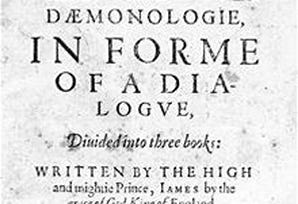
James was writing a book of his own to be published in 1597 about witch trials also; his resultant work of science fiction (which at the time was considered the word of authority), “Daemonologie”, was also about necromancy and vampires and werewolves and demons. The book described in detail what James wanted to portray as demons making humans do evil on their behalf. James was influenced by witch trials he had attended in 1590 in North Berwick, which he also was very closely involved with.
“In July 1597 James VI spent nine days at St Andrews investigating preaching at the university and attending the trials of witches. There was said to be large number of witches of several sorts (social classes) who had dedicated themselves to the devil and had a witches mark. The English diplomat Robert Bowes heard the trials would be published”
“Bowes wrote on 15 August that, "the King hath been lately pestered and in many wayes troubled in the examination of the witches, which swarme in execeeding number and (as is credibly reported) in many thousands". It was reported on 5 September that James VI remained involved in witch trials. The accused were drawn all social classes; "The King hath his mynd onlie bent upon the examination and tryall of sorcerers, men and women. Such a great number are delated (accused) that it is a wonder, and those not onlie of the meanest sort, but also of the best".”
This is not to be confused with The Great Scottish Witch Hunt of 1649
James, who happens to be in the right place at the right time for all sorts of supernatural adventures and happens to be having a big witch hunt, which nobody appears to remember what the genesis of was, as his book about witch hunts is being released makes me a little suspicious.
Oh man, it must have been bad 😂
Wow, I lived in Scotland when I was a young military wife in the 90s, but never learned anything about their witch hunts. Thanks, Ted. I always learn something from you. 😊